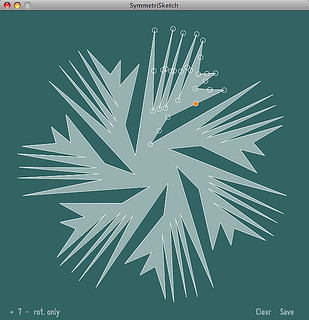
Many math symbols are really pictures, such as 0 for emptiness or ∞ for endlessness. In the title Purple Comet! Math Meet the exclamation mark in the middle is the picture of a comet, of course. But what is a math meet?

Pictures: the Buddhist symbol of emptiness, the infinity logo of the Journal of Humanistic Mathematics, and the Purple Comet! logo.
Imagine a group of kids who like to solve math problems, and who get together for the purpose. This is one of traditional ways to run a Math Circle. You just need some enthusiastic, more experienced kids or grown-ups as helpers, and good problem collections. Right? Not exactly! Turns out that in a few months, just solving problems becomes too monotonous.
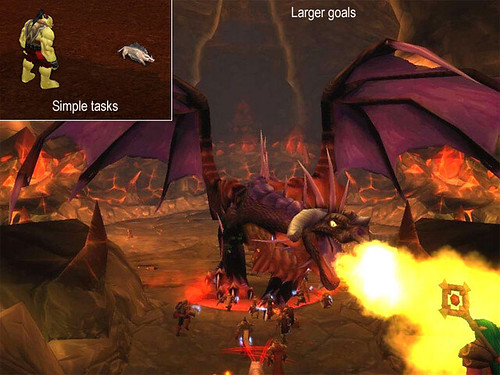
Let us look at gaming. All successful games have a series of doable, satisfying, repeatable tasks. But these tasks build up to larger, more complex goals. Good games have sophisticated end-level puzzles, big construction projects that take all your resources, or fierce boss fights you can only win by heroic measures. You valorize the daily tasks, because you anticipate and remember these awesome special events.
The traditional big events for problem-solving Math Circles are math competitions. There are many competitions, but Purple Comet! math meet stands out because of its clever, modern design. As other quality competitions, Purple Comet! offers children original, meaningful, interesting, tricky problems that are a joy to solve – that is, real mathematics. But there is more:
- Global network, local communities. Purple Comet! is an international festival and an online event – but it consists of local experiences with friends. The global network generates energy, problem-posing support, and the sense of scale that a local circle would not achieve alone. But local communities provide the depth of discussion, camaraderie and nurturing that a global network lacks. Together, the two aspects work their magic.
- Teamwork. The vast majority of math and science is done collaboratively, but children often take tests and competitions alone. Purple Comet! invites teams to solve problems together, only competing against other teams. This allows for more interesting types of problems. For example, some problems require insight, which is more likely to happen in group brainstorming. Other problems split into multiple sub-problems, so each person can tackle a piece of the bigger puzzle.
- Technology is welcome. While doing things by hand can be artistic, quaint, or cute, most children who love science and math, and of course all STEM professionals, use computational tools in their problem-solving. Purple Comet! problems are designed with computing devices in mind. The problems focus on ingenuity and reasoning, rather than memory or computation. However, many problems are based on number patterns, so students learn to appreciate how numeracy and computational fluency help in problem-solving.
- Self-checking. The design principle of self-checking goes back to Montessori. All problems have nonnegative integer answers. At the beginning, this principle made it easier to program Purple Comet! software. By now, it became an appreciated tradition. If a team gets a different sort of answer, they know to rework the problem. The known format of an answer is a hint, but not a big reveal, like knowing the correct answer would be.
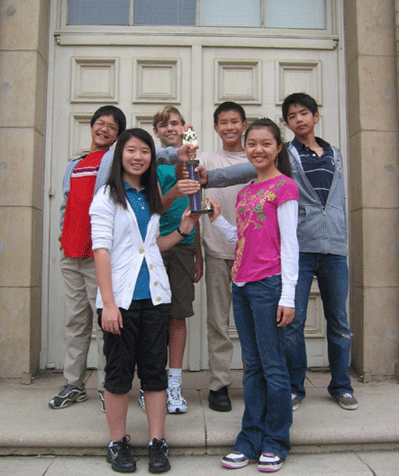
Photo: Pasadena Middle School Purple Comet! team
To share the joy, Titu Andreescu and Jonathan Kane of the appropriately named AwesomeMath assembled problems from the first ten years of Purple Comet! math meet in a hardcover book with beautiful, clean layout of formulas and diagrams. You can use the book as a source of problems for family math or Math Circles. If you are a designer, the collection will be a valuable source of strong practices in curriculum development centered on problem-solving.

This December, Purple Comet! and other books from AwesomeMath are 20% off.