
Math Storytelling Day, and math like music and dance: Newsletter August 4

Subscribe and read archives
Pinterest | Twitter | Facebook | Google+
Hi, I am Moby Snoodles, and this is news about Natural Math.
Send me your questions, comments, and stories of math adventures at moby@moebiusnoodles.com

In this newsletter:
- Math Storytelling Day
- Quick bits from our blog
- 1001 Circles: planning the incubator for math circle leaders
Math Storytelling Day September 25
Back in early June, the Moebius Noodles crew participated in the Maker Faire in Raleigh, NC. We enjoyed coming up with maker-style math adventures. And we’ve seen so much joy from children and adults who made their own mathematics at our booth! That’s why we want to continue that theme: MATH IS WHAT YOU MAKE OF IT.
So we decided to make MAKING our theme for this year’s celebration of Mathematics Storytelling Day, September 25. We are inviting you to join our community of kids and adults from around the world in storytelling, with your story of what you make of mathematics – in pictures or words.

In the spirit of making, with this awesome design by our illustrator Mark Gonyea, we’ll produce a small quantity of Math Maker t-shirts. See the Math Storytelling Day page for details.
Blogs and networks
What if we could learn math like children learn music within a cultural tradition? What if we could learn math by being immersed in meaning and expression from the moment we’re born? These questions come up as Malke Rosenfeld and I watch kids and adults dancing and making music. What do you think?
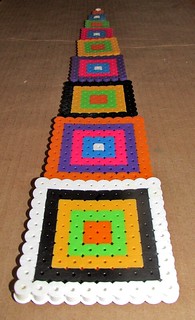
“Mom, it’s a fractal of square numbers!” – Yelena McManaman and her son invite you to explore multiplication patterns with Perler beads.
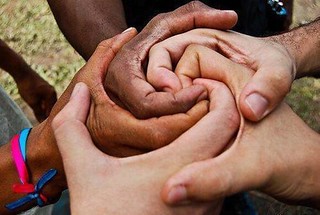
Check out this review of traditional, or new and surprising finger tricks for math from Marina Mersenne, including a way to make Fibonacci spirals with hands, and the Official Math Salute. If your kids can’t get enough of these tricks, here is how to count to 99 on your fingers that goes back to the Soroban abacus – with big thanks to Alexander Bogomolny for his photos!
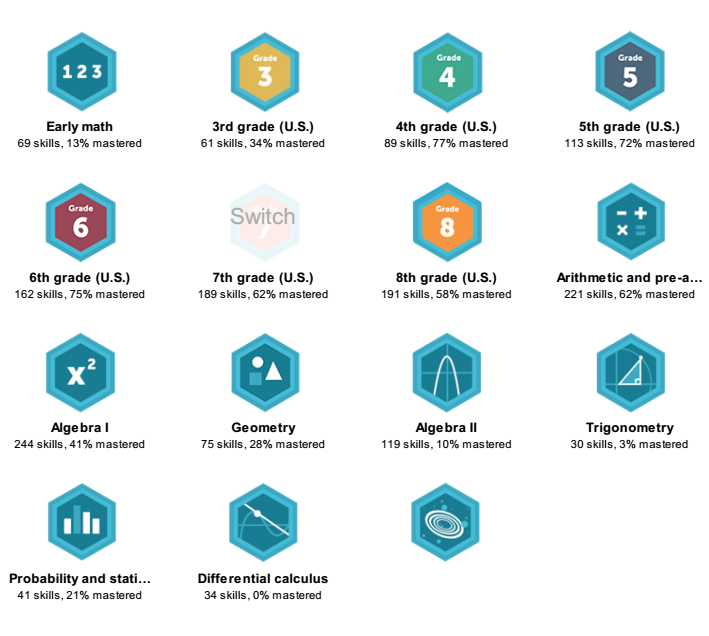
Who is this mystery person? A teacher, a US president, a young kid, or maybe a whole family sharing an account? What is that person’s real grade level in mathematics? Look at the screen capture from a Khan Academy profile, and try to guess by August 10, when we will reveal the answer.
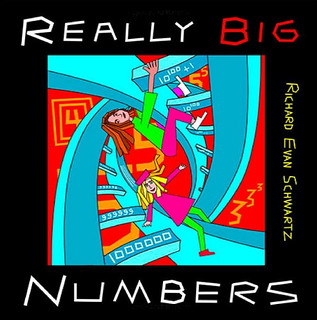
“Really Big Numbers is a small book that can take a long time to read or even look through. It is a chance to learn something new about the really big numbers. But it is also a chance to experience the awe, the mystery and the playfulness of math with your child and as a child.” Read the full review of the new book from the author of “You can count on monsters” posters.
1001 circles incubator
In the last newsletter, we announced plans for a training program for new math circle leaders. The goal for the program members will be to prepare, plan, and run their first circles this fall. The response has been very enthusiastic. We are exchanging letters with prospective members of the math circle incubator. Together, we can create a program that addresses the worries, turns dreams into plans, and makes a difference for the children.
- How can I make it relevant and age-appropriate? What are the kinds of fundamental math concepts kids can pick up from play in math circles? For example, when/how to introduce concepts like operands, calculation, logic, sets, number systems, geometry, logarithms, just to name a few… How to set the stage for kids to make connections? – Rachel R.
- My biggest hope and worry as a math circle leader is to help my kids avoid the trap I fell into. I went to 3rd semester calculus, static/dynamics, and calculus-based physics, before I imploded. I had breezed through high school and the first year of college with little effort for math. I was good at memorization and identifying patterns. I didn’t get the “why” behind any of it and no one seemed to care, as long as the grades were good. Then I hit a wall and didn’t understand why until years later. My fear is that my whole background is in the traditional way of learning math and this path is this muddle in my brain. – Brad S.
- I dream of being an effective guide for the children. I want to spark their curiosity by letting them led their own learning. I want to create an amazing place for children to work and learn and play together. – Darlene L.
- I love the Montessori math materials but would like to add addition opportunities to “play with” and discover the beauty of mathematics. – Janie J.
- My biggest worry is not being able to respond to the groups’ interests in presenting information or provide enough various opportunities of exploring math. My dream is to build up my knowledge and to share that learning adventure with my children and my community. I hope to promote curiosity and joys of learning. – Linley M.
- My greatest hope for being a math circle leader is to learn myself how to think outside of the worksheets, textbooks, and sit at a desk doing math problems mindset! – Rabia H.
Write moby@moebiusnoodles.com if you are interested in participating!
Sharing
You are welcome to share this newsletter online or in print.

Talk to you soon! Moby Snoodles, aka Dr. Maria Droujkova
Posted in Newsletter
Math Storytelling Day resources
September 25 is Math Storytelling Day! To celebrate that holiday, people tell mathematical stories to friends, family, and the whole internet. September 25 we celebrate pretend-play and traditional wisdom in mathematical stories from all over the world.
Tell the classic, traditional Hotel Infinity story.
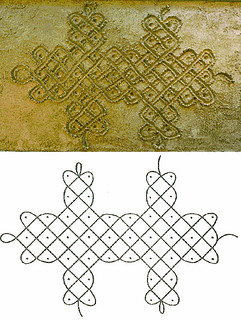
Do an ethnomathematics craft, such as traditional sand drawing stories from the Sona tribe.
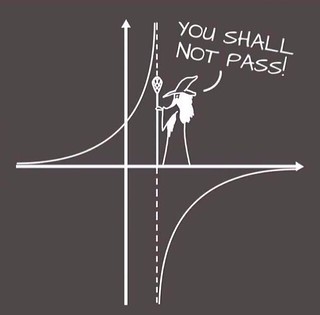
Tell math anecdotes and jokes, do skits, or post humorous pictures.
Go on scavenger hunts to find math everywhere.
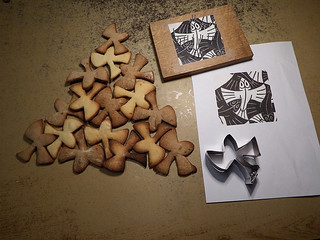
Celebrate with math food.
Read mathematical literature.
Check out past stories bloggers shared about their Math Storytelling Day celebrations!
- All the storytelling posts on Moebius Noodles
- Let’s Play Math 2013
- It’s just math 2013
- ScienceLens 2012
- Minitab 2011
- Math Mama Writes 2010
Found a good math storytelling resource? Drop us a line!
Posted in Make
Math like music
This story is a part of the ongoing conversation about children’s participation in math and the arts with Malke Rosenfeld of Math in Your Feet.

Photo by Kirsty Kelly
What if we could learn math like children learn music within a cultural tradition? What if we could learn math by being immersed in meaning and expression from the moment we’re born?
What does it look like when children fully participate in a culture as persons of recognized value?
Here children provide a high-energy improvised beat for a joyful street performance. The children are at the center of the action, and the adults smile as well as provide visual, gestural and verbal cues to encourage the children.
And here a little dancer’s performance is the heart of flamenco. It is obvious she is steeped in the music. We see the same kinds of encouragements as in the video above: warm smiles and supporting cues.
Alexandra Beller is following intuitive dances of a toddler to compose a profound interpretive piece, Milk Dreams. In our interview (coming up on this blog), Alexandra said:
“When I watch my company doing that material, I am totally transported. It’s a complete other world. I have never experienced anything like that. I can’t speak for a while. It’s a completely different space.”
Those teachers and parents who follow young children’s mathematics also describe how they feel transported to incredible, unexpected Wonderlands. While children take adults on adventures to the new frontiers, adults help to sustain connections to the homeworld. Kids and grown-ups make a great team, together.
Children in the first two videos perform music and dance at very high levels. But the third video shows the same mix of child inspiration and adult support with an obvious beginner: a baby! Children who have been supported that way from a very young age can do amazing music and dance. How do we build or find such a culture of participation and mentorship for children, so they are immersed in amazing mathematics?
Posted in Grow
How to Make Multiplication Tables with Perler Beads


My child has been playing with Perler beads for a while now making all sorts of things, including a map of Minecraft. So when I suggested making a multiplication table, the kid was very interested. Except a) I didn’t have a clear idea of how to make multiplication tables out of multi-colored beads and b) my child didn’t know what multiplication was.
No worries, I figured we would both learn by doing. Pretty soon we figured out that we wanted to use the large beads, not the little ones, and that making the entire tables would be too boring and time-consuming. So we decided to concentrate our efforts on square numbers.
After we put the cornerstone 1×1=1 round bead in the top left corner, the kid asked why do we call these square numbers if 1 didn’t look like a square. “Let’s make some more and see what happens, shall we?” Sure thing, 2×2=4 looked like a square and so did 3×3=9. But would 7×7 be a square? How do you know?
At first we made each square filled in with beads of the same color. So our 2×2 was all orange and 3×3 was all blue and 4×4 was all green and so on. It was pretty, but pretty boring. Then we started experimenting, taking out the inside beads so that only a square frame was left. So we decided to fill this frame with different colored beads. As we were discussing which colors to use for the 4×4 square, we noticed something:
2×2 square frame had no opening
3×3 square frame had a 1×1 opening
4×4 square frame had a 2×2 opening
What opening would a 5×5 frame have? Turns out:
5×5 square frame had a 3×3 opening, which had a 1×1 opening!
“Mom, it’s a fractal of square numbers!”
Let’s see what other patterns we noticed. Even squares (4×4, 6×6, 8×8 and 10×10) had even openings in them. And odd ones had odd openings. Why? Hint: it had a lot to do with the beads themselves and with how we chose to nestle the frames.

Then it was time to fuse the beads together and then to admire them. I set them out on a diagonal, as they would be in a 10×10 multiplication grid. The kid made another discovery of his own:
“We can integrate a pyramid with the squares!” and “This is like a mandala for Minecraft!”

My child played a very active role in the process, from choosing colors to noticing patterns to coming up with the unexpected connections to other ideas, like fractals and integration. What was my job? First, I helped keep the patterns consistent, especially when we did the frames. Second, I shared what I knew – the multiplication grid, square numbers. Third, I documented the experience. Later, as we looked through the pictures and went through my notes, it gave us both a chance to reflect on the math we found.
Together, we had a great time exploring and discovering patterns. Perhaps we’ll try the rest of the tables another time. Do you see bridges to even more ideas we can explore?
Posted in Make


